Day 2: Scrum 101: Roles and Kanban
A deep dive into the Scrum team and the principles of flow.
Recap & Connection
A set of clean, modern interlocking gears, symbolizing how the foundational concepts from Day 1 connect and build upon one another.
Welcome to Day 2! Yesterday, we laid the foundation by exploring the shift from traditional to modern project management. Today, we'll build on those concepts by diving deep into the roles that make Scrum work and the principles of Kanban flow. Let's quickly review the key concepts from Day 1:
- Project vs. Process & SMART GoalsA project is a temporary endeavor with a unique goal, while a process is ongoing. SMART goals make project objectives clear and actionable.
- The Waterfall ModelA traditional, linear project management approach with sequential phases. It is rigid and not well-suited for projects with changing requirements.
- The Agile Manifesto & PrinciplesThe core philosophy of Agile, prioritizing individuals, collaboration, and responding to change over rigid plans and processes.
- Scrum & LEAN PhilosophiesScrum is an Agile framework for managing complex work. It is heavily influenced by LEAN, which focuses on maximizing value and minimizing waste.
- Introduction to KanbanA visual method for managing workflow, focusing on continuous delivery and limiting work in progress (WIP) to improve flow.
What is Scrum?

A photo of a rugby team locked together in a scrum formation, pushing forward as a single unit.
ScrumScrum is a lightweight framework that helps people, teams and organizations generate value through adaptive solutions for complex problems. is an Agile framework that helps teams structure and manage their work through a set of values, principles, and practices. It's designed for developing, delivering, and sustaining complex products, using an iterative approach to ensure the most valuable work is completed first and that the team can adapt to change.
The Five Scrum Values
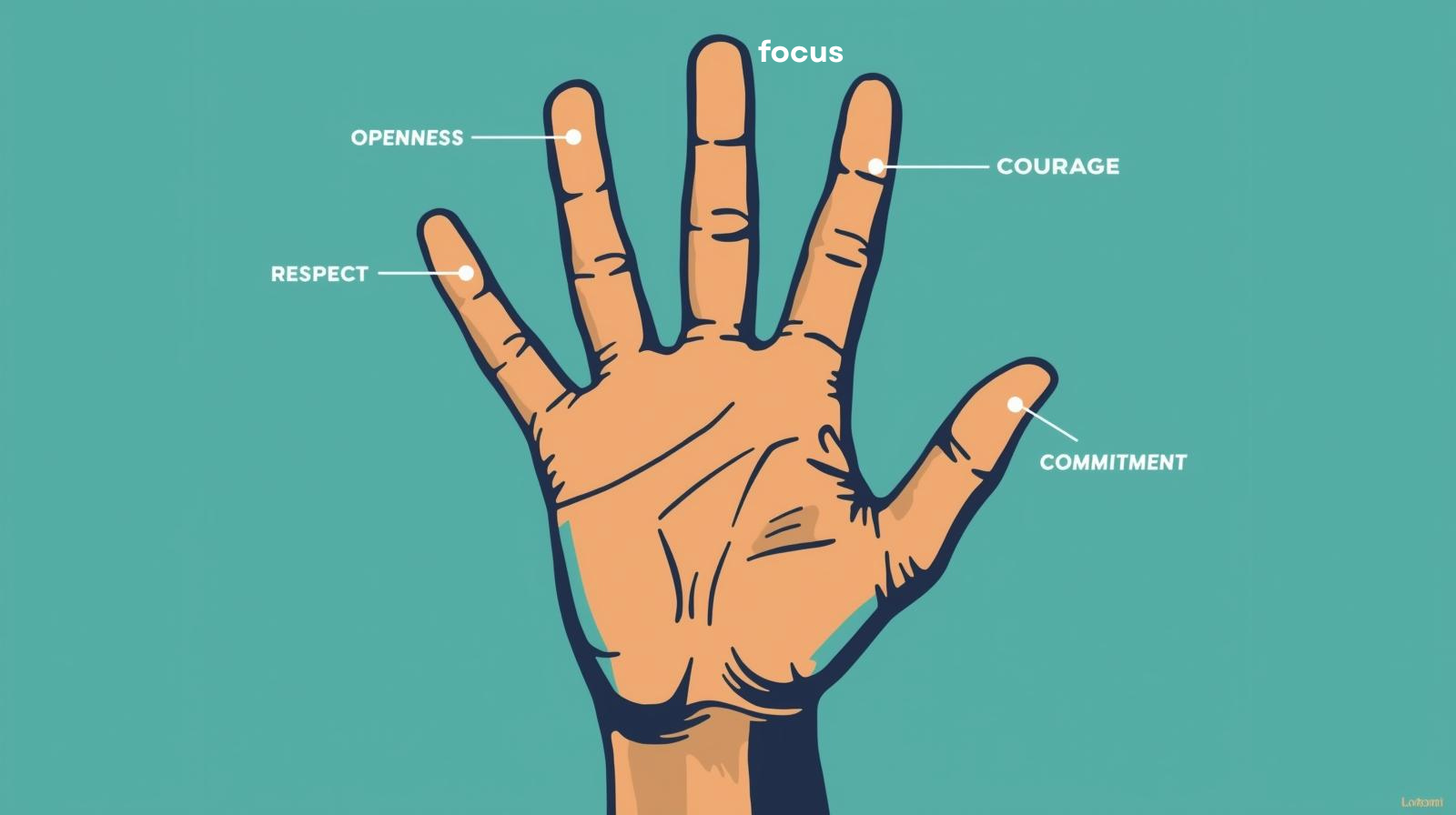
An infographic of a stylized hand with five fingers, each labeled with one of the Scrum values: Focus, Courage, Commitment, Respect, and Openness.
The Five Scrum ValuesCommitment, Courage, Focus, Openness, and Respect are the five values of Scrum. They are the bedrock of a successful Scrum team. are the foundation upon which a successful Scrum team is built. These values—Commitment, Courage, Focus, Openness, and Respect—guide the team's behavior and decisions. For example, 'Courage' empowers team members to speak up about impediments or question the status quo, while 'Openness' fosters a transparent environment where challenges can be addressed early and honestly.
The Basics of Kanban Flow
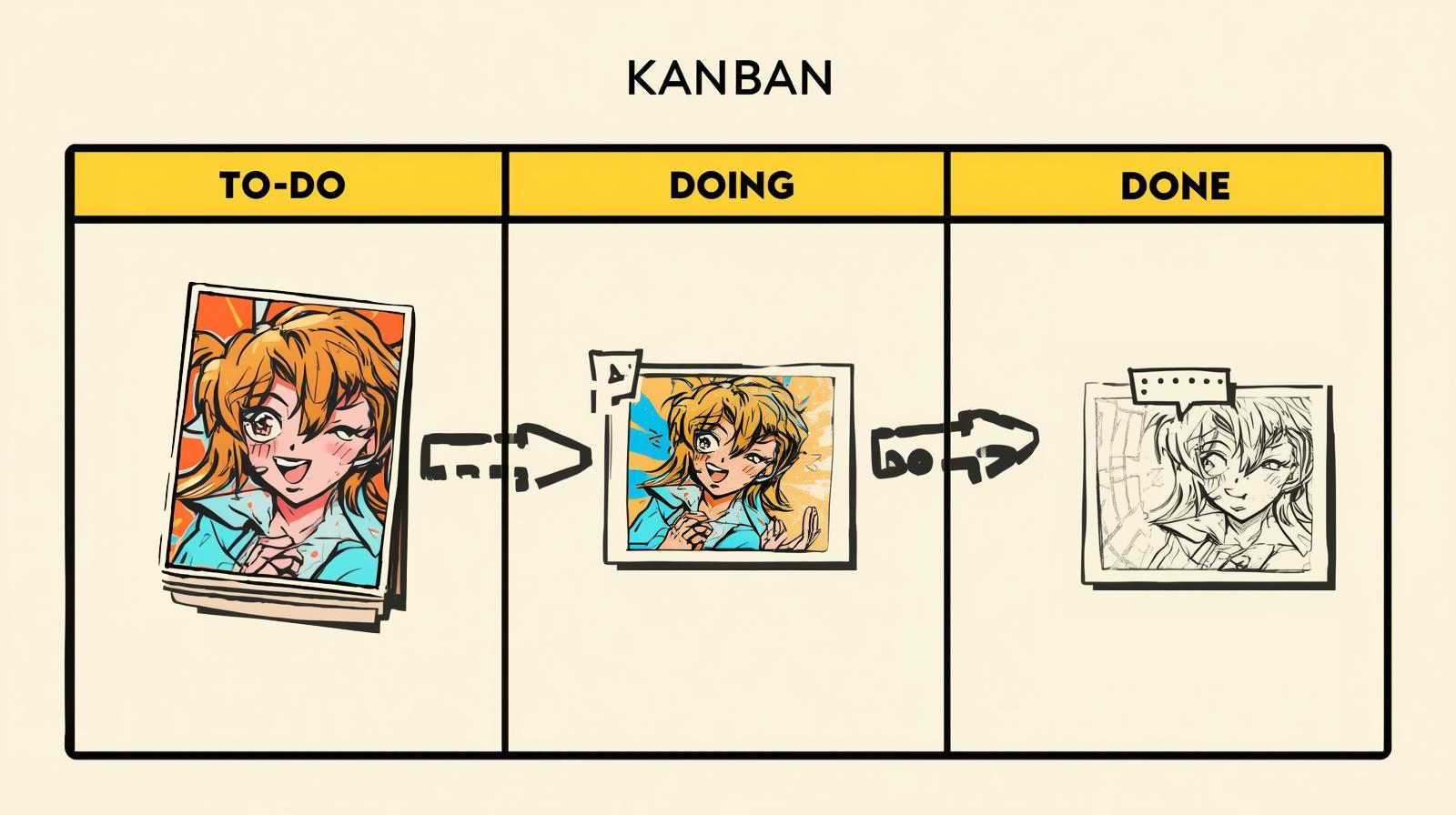
An infographic of a simple, three-column Kanban board labeled 'To Do,' 'In Progress (WIP Limit 3),' and 'Done.' Task cards are shown flowing from left to right.
KanbanKanban is a method for managing knowledge work with an emphasis on just-in-time delivery while not overloading the team members. is a visual system for managing work as it moves through a process. It's all about visualizing the workflow, limiting work in progress (WIP), and maximizing efficiency. By setting WIP limitsWIP limits are a set of constraints that a team agrees to apply to their work in order to improve their workflow and throughput., teams can reduce the negative effects of multitasking and context switching, leading to a smoother and more predictable flow of work.
Project Initiation: Mission, Vision & Success

A majestic unicorn standing in a magical forest, representing the rare and idealized outcome of a project with a perfectly aligned mission and vision.
Before a single task is started, a successful project needs a clear direction. This begins with defining three key elements. The Mission is the project's purpose—what it aims to achieve right now. The Vision is the long-term future state the project will help create. Finally, Success Criteria are the measurable metrics that tell you when you have achieved your mission. A project without these is like searching for a mythical creature without a map; a well-initiated project, however, can make even a unicorn seem achievable.
Choosing Your Path: The VUCA Framework
An infographic with four quadrants for Volatility, Uncertainty, Complexity, and Ambiguity, each with a representative icon and a brief description.
How do you decide between a predictive approach like Waterfall and an adaptive one like Agile? The VUCAAn acronym for Volatility, Uncertainty, Complexity, and Ambiguity, used to describe challenging or unpredictable environments. framework can help. If your project environment is stable and predictable, Waterfall may be suitable. However, if your project faces Volatility (rapid change), Uncertainty (lack of predictability), Complexity (many interconnected parts), or Ambiguity (unclear cause-and-effect), an Agile approach is almost always the better choice. It's designed to thrive in these unpredictable conditions by allowing teams to learn and adapt as they go.
Role Deep Dive: The Product Owner (PO)
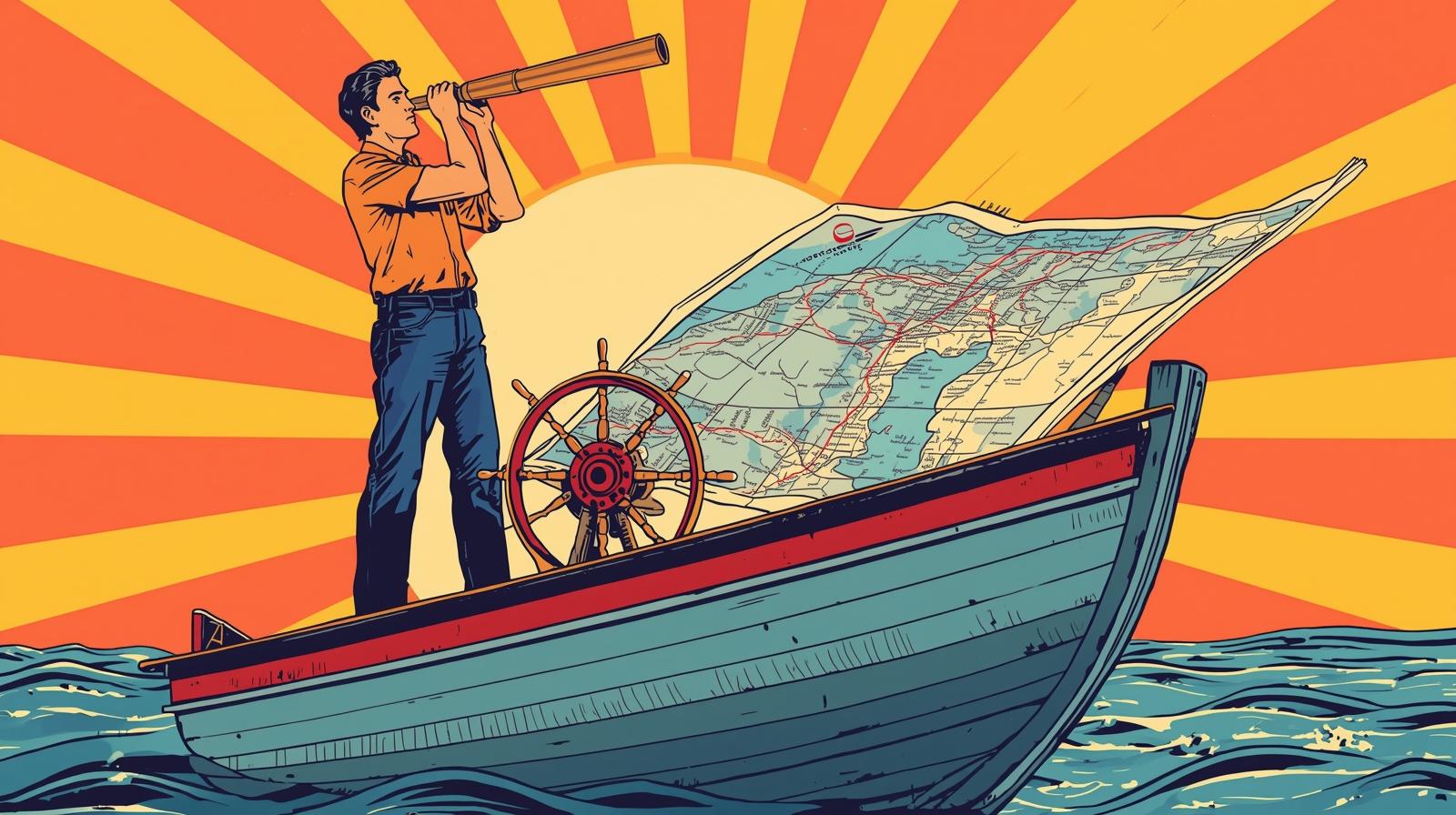
A person on a boat holding a steering wheel and looking through a telescope, symbolizing the Product Owner's role in setting direction and vision.
The Product OwnerThe Product Owner is the member of the Agile Team who serves as the customer proxy and is responsible for working with product management and other stakeholders to define and prioritize the product backlog. is the voice of the customer and is accountable for maximizing the value of the product. Their primary responsibilities include managing the Product Backlog, defining the product vision, and communicating with stakeholders. It's important to note that while the PO is accountable for these tasks, they don't necessarily have to perform all the work themselves; for instance, they don't have to write every user story.
Defining the Project Scope

A brilliantly cut diamond with clear facets, symbolizing a project scope that is well-defined, clear, and valuable from all angles.
Think of the project scopeProject scope is the part of project planning that involves determining and documenting a list of specific project goals, deliverables, tasks, costs and deadlines. as a raw diamond. It has potential, but its true value is only revealed when it is clearly defined and cut. A well-defined scope has clear boundaries, outlining exactly what is included in the project and, just as importantly, what is not. This clarity prevents "scope creep"Uncontrolled changes or continuous growth in a project's scope. This can occur when the scope of a project is not properly defined, documented, or controlled. and ensures the team delivers a brilliant, valuable final product.
Charting the Course: The Product Roadmap

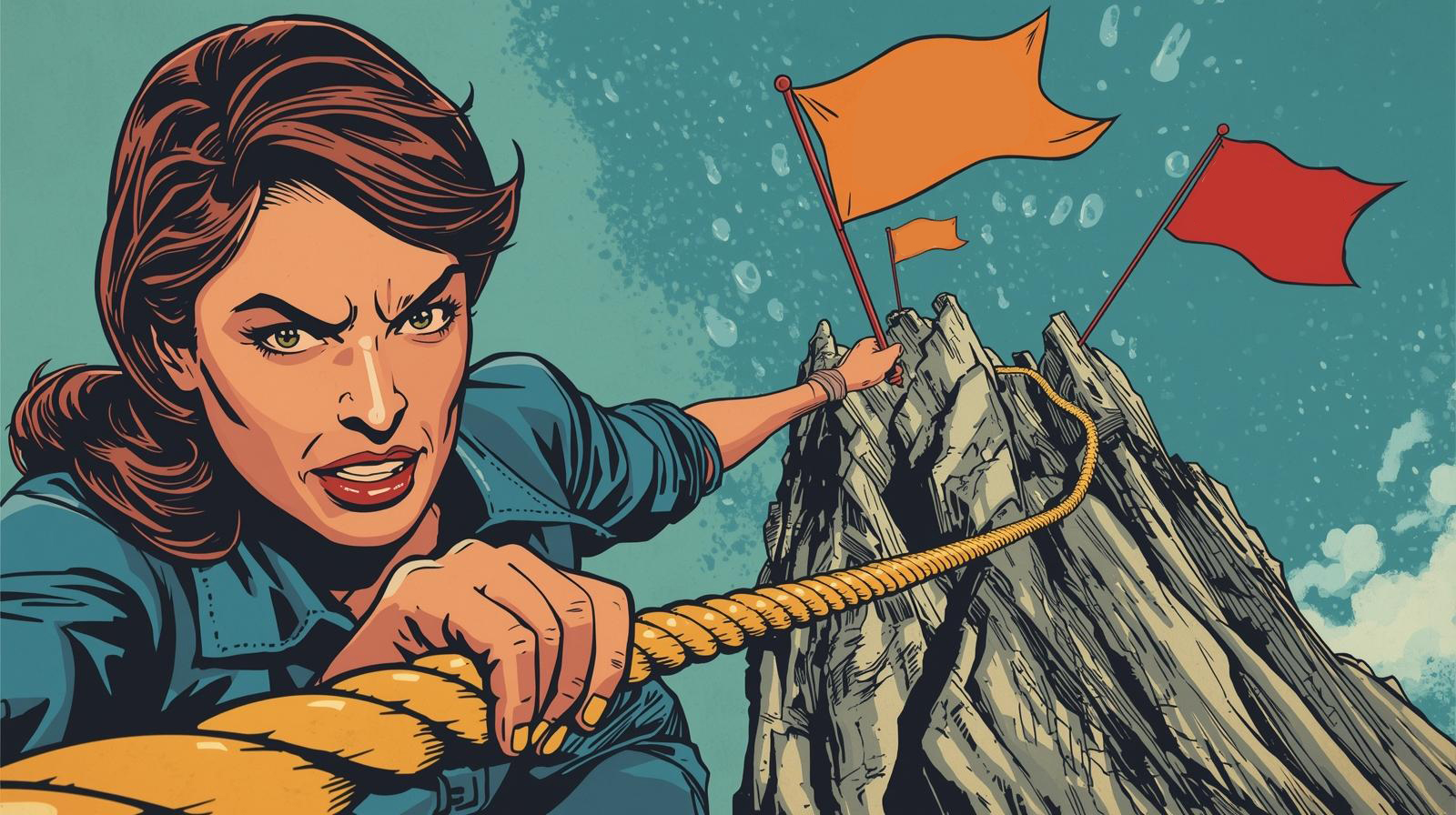
A winding road leading up a mountain with several key milestones marked along the way, symbolizing a product's strategic journey.
The Product RoadmapA high-level, strategic document that outlines the vision, direction, priorities, and progress of a product over time. is a high-level strategic plan that outlines the vision and direction of the product. Owned by the Product Owner, it communicates the "why" behind the work. Unlike a detailed release plan, a roadmap focuses on major themes and goals over time, providing a guiding star for the team and stakeholders, ensuring everyone is climbing the same mountain.
Starting Smart: The Minimum Viable Product (MVP)
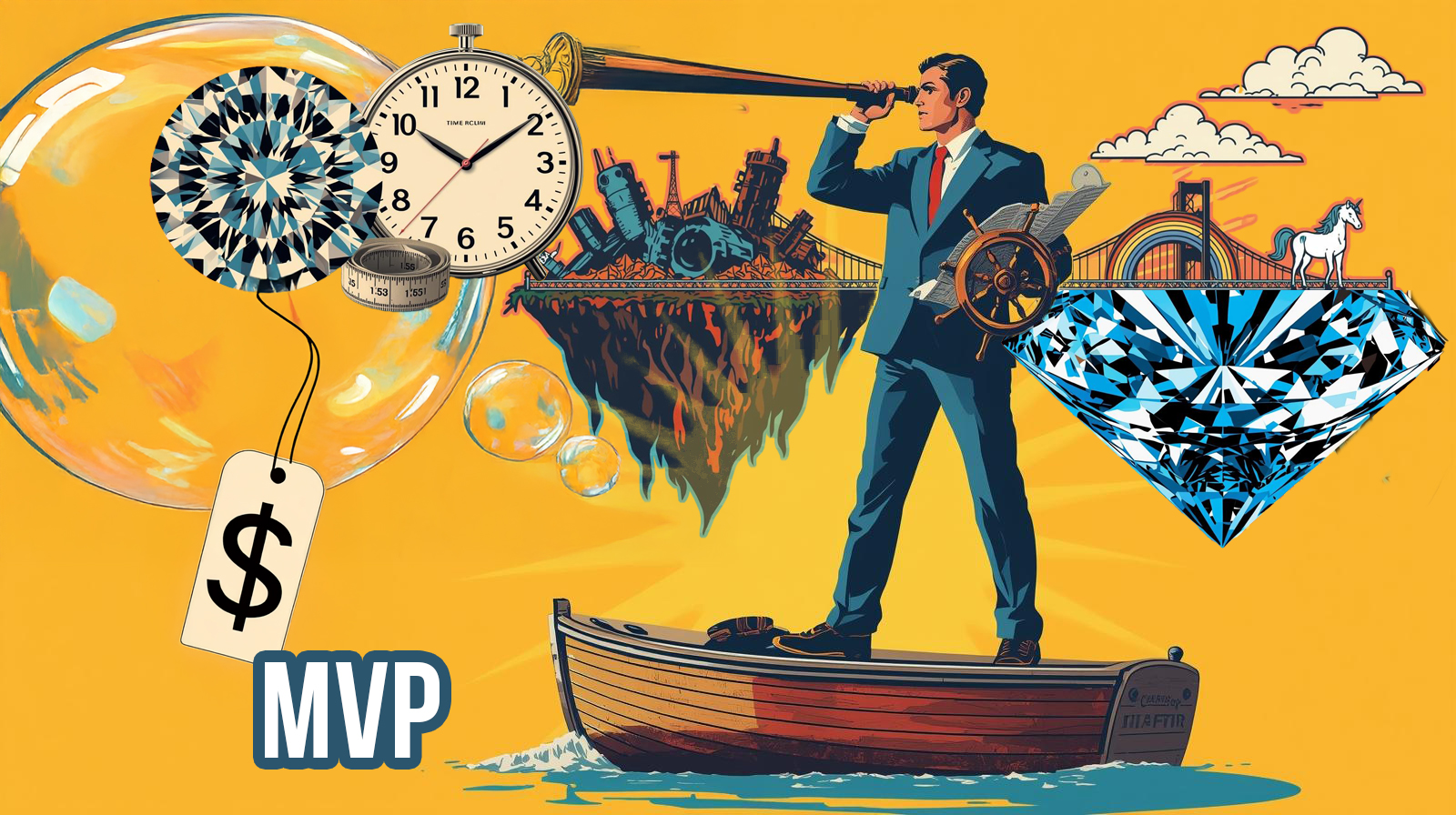
An infographic showing the wrong way to build a product (delivering non-functional parts like a single wheel) versus the right way (delivering a functional skateboard first, then evolving it into a car).
A Minimum Viable Product (MVP)The version of a new product which allows a team to collect the maximum amount of validated learning about customers with the least effort. is a strategy for getting a new product to market quickly. It's not an unfinished product; it's the simplest, most basic version of the product that can be released to provide value to early customers and gather crucial feedback for future development. This approach minimizes risk and ensures that the team builds what customers actually want.
Understanding Dependencies: The Critical Path
A project network diagram with several paths of connected tasks. One path is highlighted in red, indicating it is the longest and therefore the critical path.
The Critical PathThe longest sequence of dependent tasks that must be completed on time for the entire project to be completed on schedule. is the longest sequence of dependent tasks that must be completed to finish a project. Any delay in a task on the critical path will delay the entire project. While this method is a cornerstone of traditional project management, understanding task dependencies is just as vital in Agile for identifying risks and planning sprints. To help prioritize which tasks must be on the critical path, teams often use techniques like MoSCoWA prioritization technique to categorize features as Must-have, Should-have, Could-have, or Won't-have, clarifying what is essential for a release..
Role Deep Dive: The Scrum Master (SM)

A personal coach figure helping an athlete jump over a hurdle, illustrating the Scrum Master's supportive leadership and role in removing impediments.
The Scrum MasterThe Scrum Master is the team role responsible for ensuring the team lives agile values and principles and follows the processes and practices that the team agreed they would use. is a servant-leaderA servant-leader focuses on the growth and well-being of people and the communities to which they belong. and a process coach for the team. Their key accountabilities include coaching the team in self-management, removing impediments to progress, and ensuring that everyone understands Scrum theory and practice. The Scrum Master is not a project manager or a team boss; instead, they are a facilitator and a coach.
Navigating Project Roadblocks
A person stands before a giant boulder blocking a road, symbolizing a project impediment that the Scrum Master must help the team overcome.
A roadblock, or impediment, is anything that slows down the team and prevents them from delivering value. This could be a technical issue, a dependency on another team, or even an organizational process. A primary responsibility of the Scrum Master is to act as a servant-leader by identifying these roadblocks and actively working to remove them, clearing the path so the team can maintain its momentum and focus on the Sprint Goal.
Techniques for Removing Roadblocks
Two people having a constructive conversation, symbolizing the communication and problem-solving skills of a Scrum Master.
A Scrum Master uses a variety of techniques to resolve roadblocks, choosing the right approach for the situation. Key methods include:
- FacilitationGuiding the team through discussions (like a root cause analysis) to find their own solution to an internal problem.
- NegotiationWorking with other teams or stakeholders to resolve external dependencies or conflicts over resources and priorities.
- EscalationTaking the problem to higher levels of management when the team lacks the authority or resources to solve it themselves.
- CoachingHelping team members develop the skills and confidence to solve recurring problems on their own in the future.
Role Deep Dive: The Developers
A diverse group of people collaborating around a whiteboard, showing shared problem-solving and teamwork.
The DevelopersThe Developers are the people in the Scrum Team that are committed to creating any aspect of a usable Increment each Sprint. are the individuals responsible for creating a usable increment of the product each sprint. They are a cross-functional and self-managing team, meaning they have all the skills necessary to create the product increment and they decide how to accomplish their work. The Developers are empowered to make decisions about how to best deliver the work they've committed to.
BREAK & Mindset Shift
A coffee cup and a notebook on a wooden table, signifying a break for coffee and discussion.
Let's take a short break. When we return, we'll shift our mindset from the 'who' of the Scrum Team to the 'how' of the workflow. Get ready to explore how teams visualize their work and manage flow using Kanban.
Writing Effective User Stories: The INVEST Model

An infographic of a diamond with six facets, each labeled with a letter from the I.N.V.E.S.T. acronym (Independent, Negotiable, Valuable, Estimable, Small, Testable).
The INVESTINVEST is an acronym that stands for Independent, Negotiable, Valuable, Estimable, Small, and Testable. It provides a useful checklist for creating effective user stories. model provides a set of criteria for writing effective user stories. A good user story should be: Independent, Negotiable, Valuable, Estimable, Small, and Testable. By following these guidelines, teams can create user stories that are clear, concise, and ready for development.
User Stories on the Kanban Board
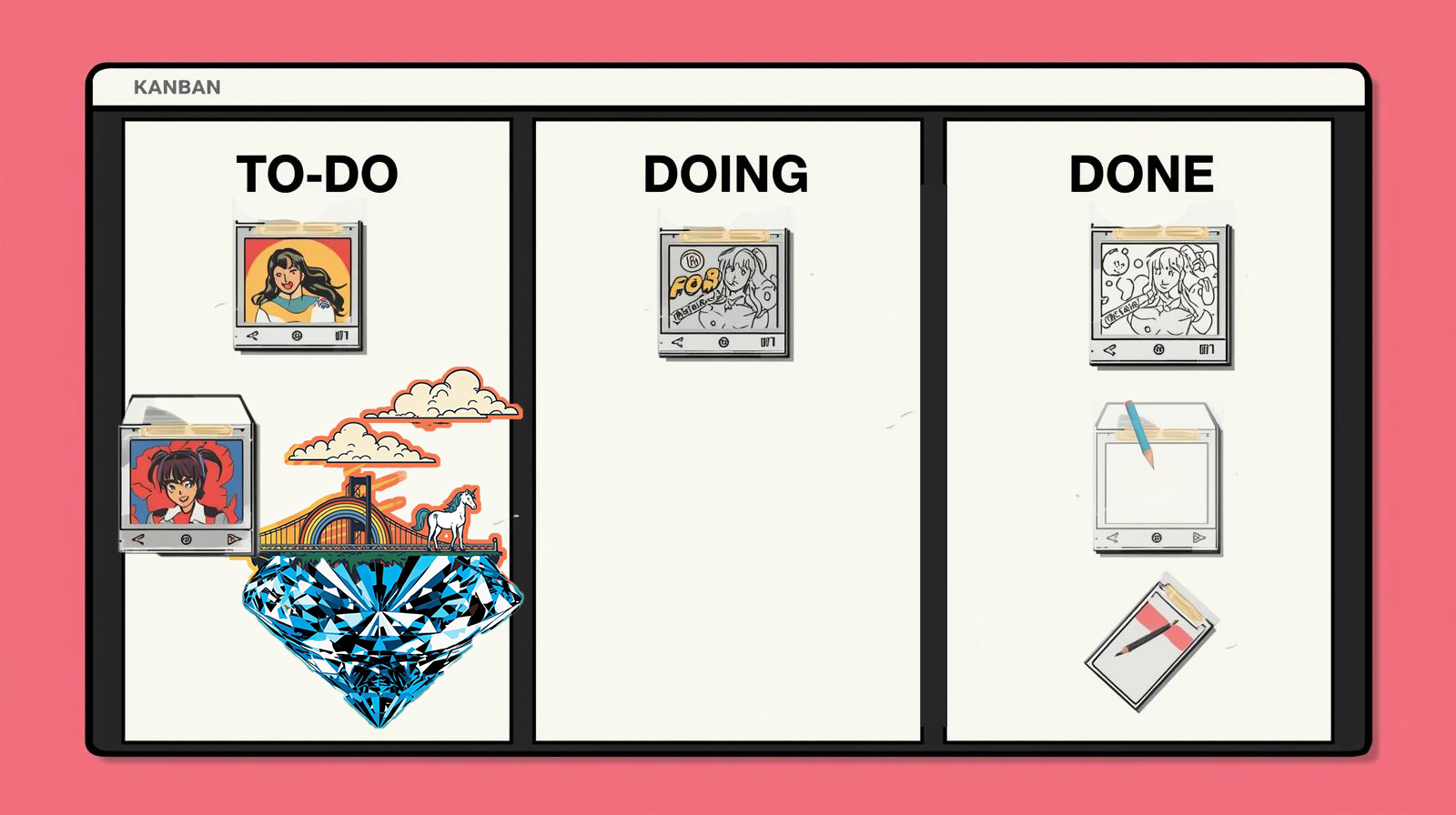
A Kanban board with columns for 'To Do', 'In Progress', and 'Done', with cards representing individual user stories moving across the board.
How do we turn ideas into action? We write User StoriesA short, simple description of a feature told from the perspective of the person who desires the new capability, usually a user or customer of the system.. Each user story represents a small, valuable piece of work. These stories then become individual cards on our Kanban board. The board makes the workflow transparent: everyone can see which stories the team is currently working on ('In Progress'), what's coming up next ('To Do'), and what has been accomplished ('Done'). This visual system is fundamental to how Agile teams track progress and manage their work.
The Scrum Artifacts: Making Work Visible
An infographic showing the three Scrum artifacts: The Product Backlog, the Sprint Backlog, and the Increment, which is a usable piece of the product.
Scrum uses three official artifactsScrum's artifacts represent work or value. They are designed to maximize transparency of key information. to manage work and provide transparency. The Product Backlog is the master list of everything needed for the product. The Sprint Backlog is the set of items from the Product Backlog selected for a specific Sprint, plus a plan for delivering them. The Increment is the sum of all the completed Product Backlog items from a Sprint. Each artifact has a commitment: the Product Goal for the Product Backlog, the Sprint Goal for the Sprint Backlog, and the Definition of Done for the Increment, all of which ensure focus and quality.
Preparing for the Afternoon Practical
Two hands passing a glowing object between them, symbolizing the handover of work and knowledge from one team to another.
This afternoon, you will apply what you've learned about roles and workflows. Your task is to define the specific accountabilities for the Product Owner, Scrum Master, and Developers within your project's context. You will also create an initial Kanban board to visualize the workflow for your scenario. This is a crucial step in setting your team up for a transparent and efficient process.