Day 1: Setting the Agile Foundation
Understanding the shift from traditional to modern project management.
Making Work Connected and Visible
A detailed image of a complex industrial clockwork mechanism, with many interlocked and moving gears, symbolizing the complexity and interconnectedness of large projects.
Welcome to the world of modern Project Management! This course is designed to equip you with the essential tools and mindset to navigate complex projects, tight deadlines, and ever-changing requirements. Today, we lay the groundwork by exploring why traditional methods often fall short in today's fast-paced environment and how the Agile philosophyAgile is an iterative approach to project management and software development that helps teams deliver value to their customers faster and with fewer headaches. has emerged to fill that critical gap.
Setting the Stage: Project vs. Process

A single, perfect piece of fruit, symbolizing the unique, well-defined goal of a project.
Before we dive in, let's clarify two key terms. A **project** is a temporary endeavor with a unique goal, like creating a specific fruit platter for a special event. It has a defined start and end. A **process**, on the other hand, is an ongoing and repeatable set of actions, like eating more fruits. This course focuses on projects. To succeed, every project needs a clear objective, which we define using SMARTSpecific, Measurable, Achievable, Relevant, and Time-bound. This framework turns vague ideas into actionable goals. goals.
The Traditional PM Method: Waterfall
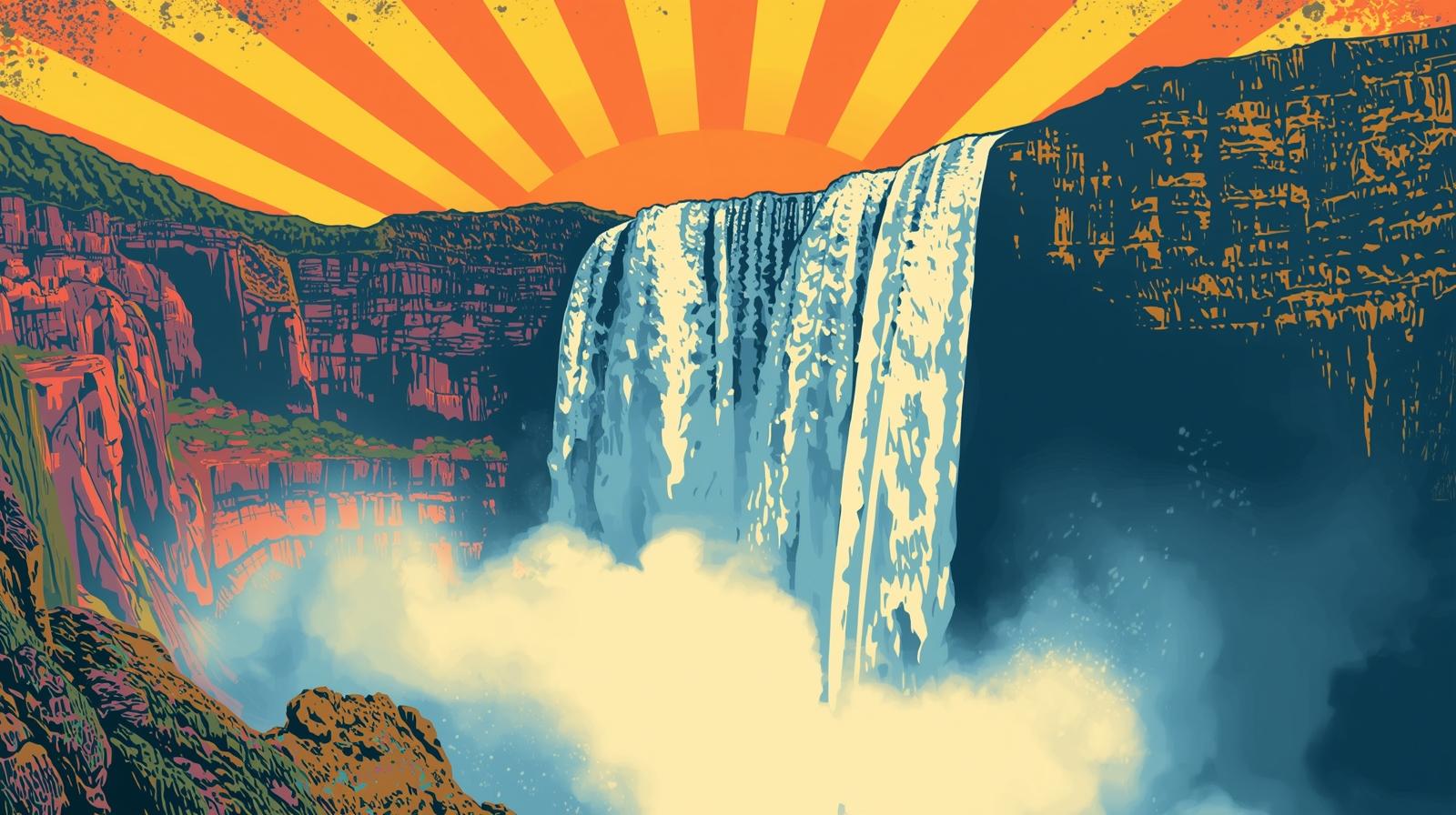
An infographic showing a steep, one-directional waterfall flowing strongly into a single, deep pool at the bottom, illustrating a non-reversible, linear process.
The Waterfall ModelThe Waterfall Model is a sequential design process in which progress is seen as flowing steadily downwards (like a waterfall) through the phases of conception, initiation, analysis, design, construction, testing, deployment and maintenance. is a traditional approach where the project is broken down into distinct, sequential phases. Each phase must be fully completed before the next one begins. This method works well for small, well-defined projects, but it struggles with modern complexities due to its rigidity, delayed feedback, and high risk if requirements change.
Traditional Project Stages
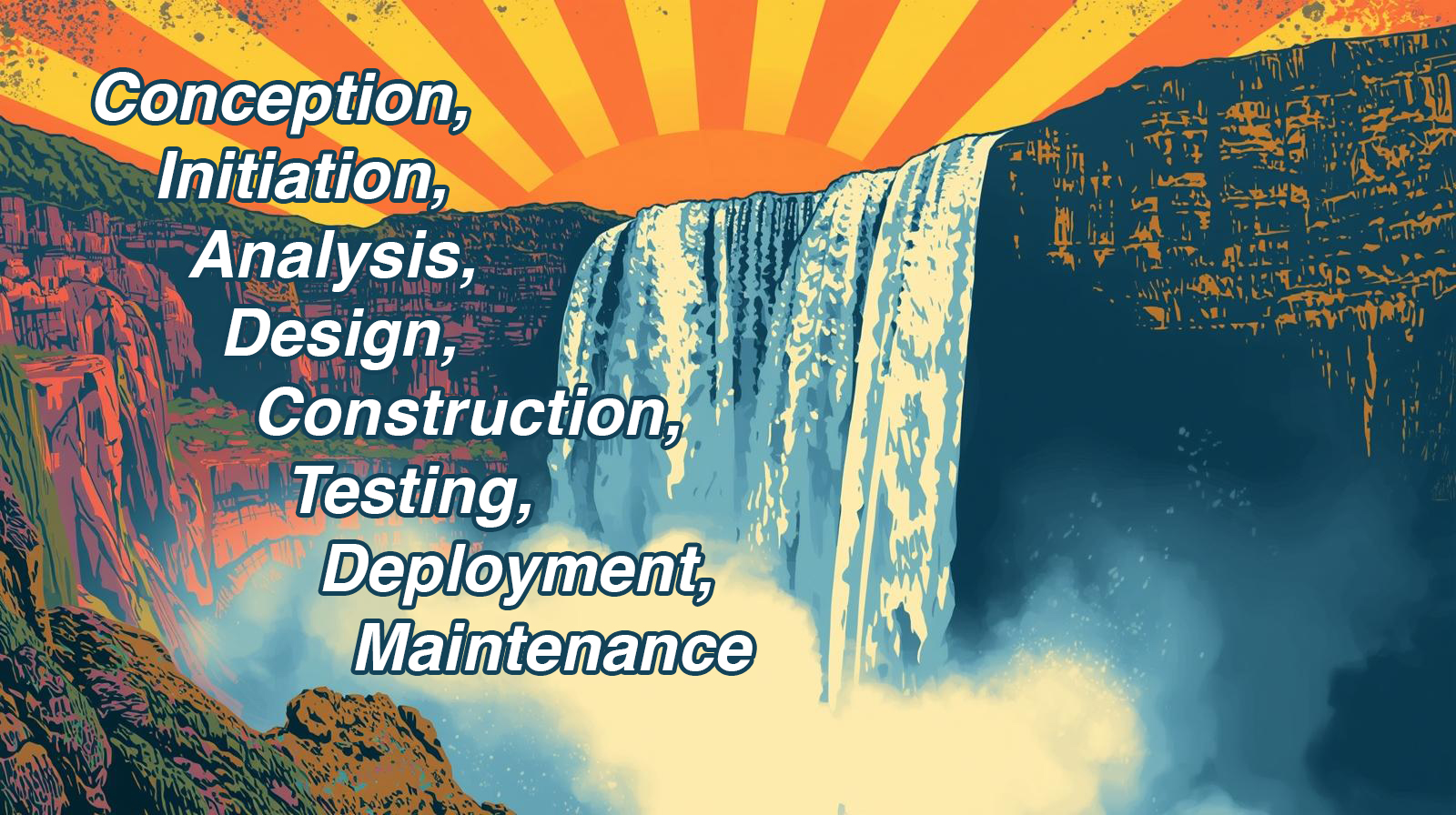
An infographic detailing the linear stages of the Waterfall model: Requirements, Design, Implementation, Verification, and Maintenance, with arrows indicating a one-way flow.
The Waterfall method is characterized by its rigid, linear progression through a set of distinct phases. It begins with **Requirements**, where all project needs are gathered upfront. This is followed by **Design**, creating the blueprint for the system. Then comes **Implementation**, where the actual coding or building happens. After that, **Verification** (or Testing) ensures the product works as designed. Finally, the **Maintenance** phase begins, where the product is supported and updated post-launch. There is no easy way to go back a step; a change in requirements late in the process can be catastrophic.
The Rise of Agile: A New Philosophy
An image of four diverse individuals signing an old manifesto document with a quill pen, symbolizing a foundational change.
In response to the limitations of traditional methods, the Agile Manifesto was created in 2001. It's not a rigid process but a philosophy built on four core values and twelve supporting principles. The manifesto prioritizes individuals and interactions, working software, customer collaboration, and responding to change. This shift in mindset empowers teams to be more adaptive, creative, and customer-focused.
The 12 Principles in Action
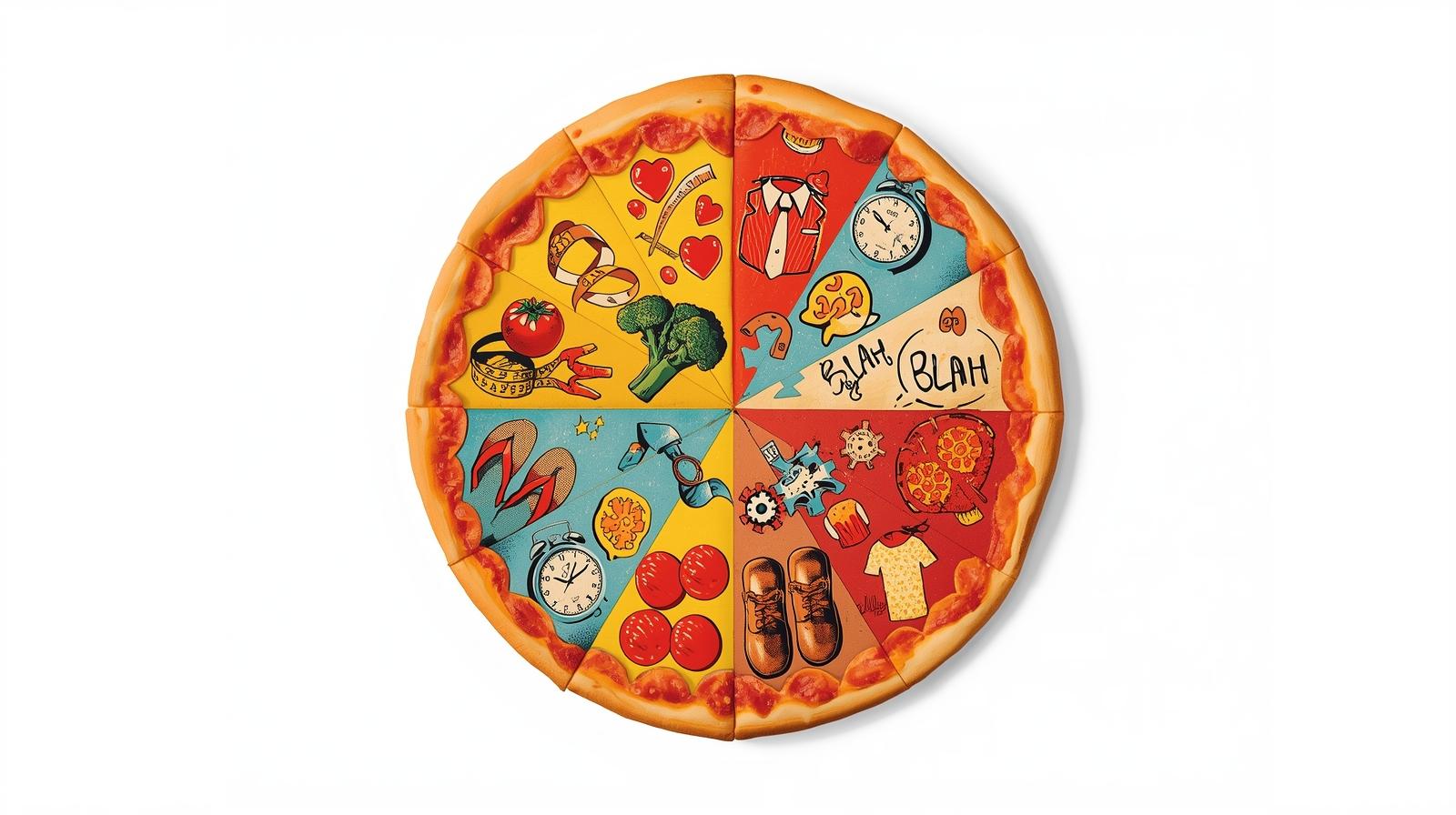
An infographic with twelve icons arranged in a circle, each representing one of the 12 Principles of Agile.
The 12 Principles of Agile provide concrete guidance on how to apply the Agile philosophy. Two of the most critical principles for modern teams are frequent delivery of valuable software and the ability to welcome and respond to changing requirements. For example, when building a university website, an Agile team would release new features in small, frequent increments, allowing for feedback and adjustments based on evolving needs, such as changes in admission cycles.
BREAK & Group Formation
A coffee cup and a notebook on a wooden table, signifying a break for coffee and discussion.
Let's take a short break. Use this time to grab a coffee, stretch your legs, and get to know your group members. When we come back, we'll dive into the specifics of the Scrum framework and how it brings the Agile philosophy to life.
The Origins of Scrum: A Lesson from Rugby

A photo of a rugby team locked together in a scrum formation, pushing forward as a single unit to gain control of the ball.
The term "Scrum" was first introduced in a 1986 Harvard Business Review article by Takeuchi and Nonaka. They observed that the best product development teams worked like a rugby team's scrum formation: a tight-knit, cross-functional group moving the ball down the field together as a single unit. This metaphor emphasizes teamwork, adaptive strategy, and a collective push towards a shared goal, which are the core tenets of the Scrum framework we use today.
Introduction to Scrum Theory
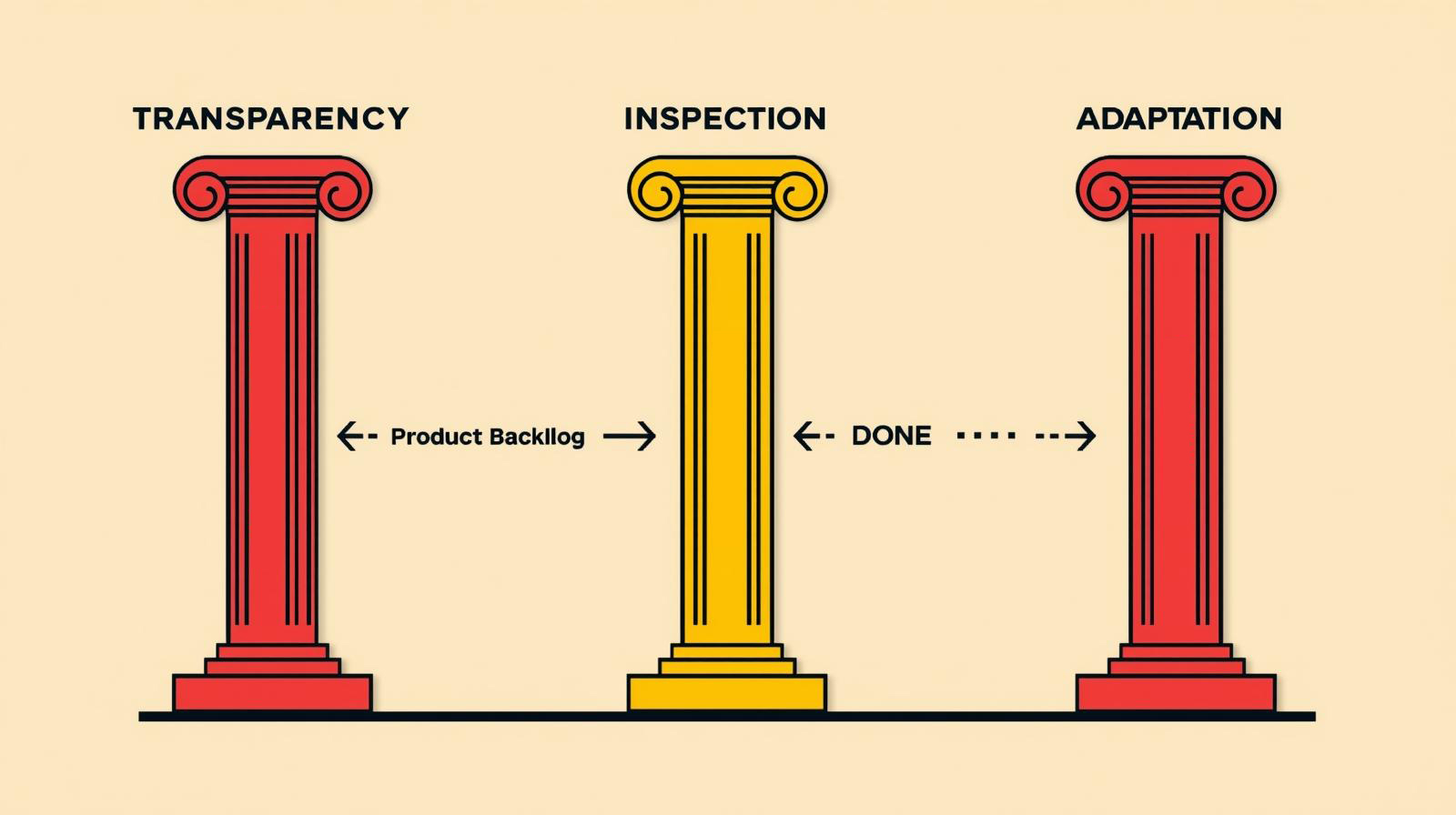
A Scrum flow diagram showing the three pillars (Transparency, Inspection, Adaptation) framing the workflow from Product Backlog to a 'Done' increment.
ScrumScrum is a framework within which people can address complex adaptive problems, while productively and creatively delivering products of the highest possible value. is the most popular framework for implementing Agile. It's founded on empiricismEmpiricism asserts that knowledge comes from experience and making decisions based on what is known. and lean thinking. The three pillars of Scrum—transparency, inspection, and adaptation—ensure that the team is always aware of the project's status and can make adjustments as needed.
Introduction to LEAN Philosophy
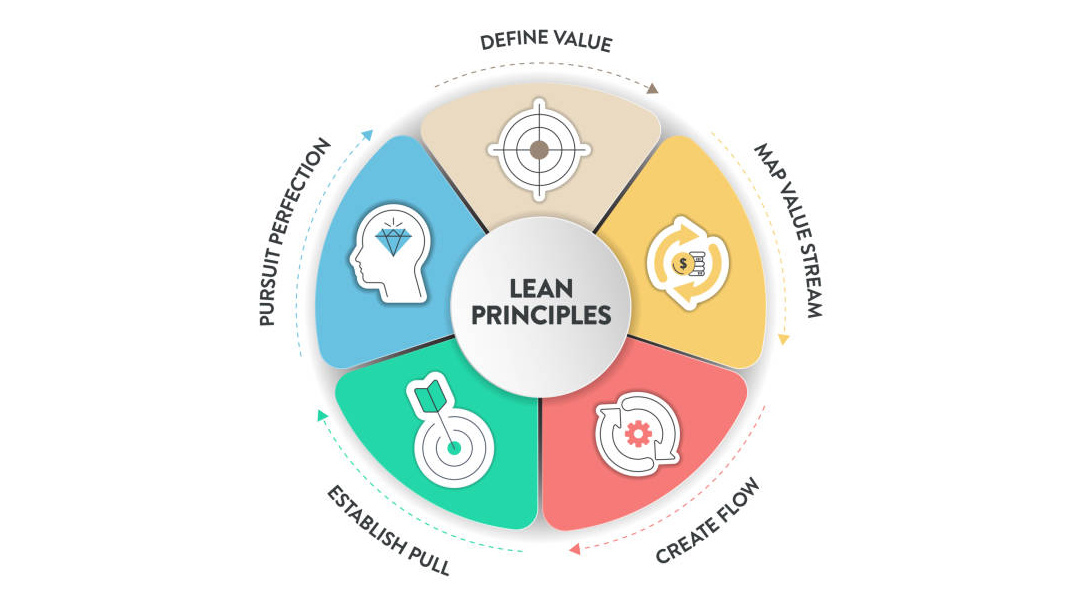
An infographic explaining the core principles of the Lean philosophy, focusing on delivering value and eliminating waste.
LEANLEAN is a business methodology that aims to provide a new way to think about how to organize human activities to deliver more benefits to society and value to individuals while eliminating waste. is a philosophy that heavily influenced Agile. The core idea is to maximize customer value while minimizing waste. This involves focusing on what the customer truly values and eliminating any steps in the process that don't contribute to that value. It's about creating more value with fewer resources.
Kaizen 5S Framework: A Place for Everything
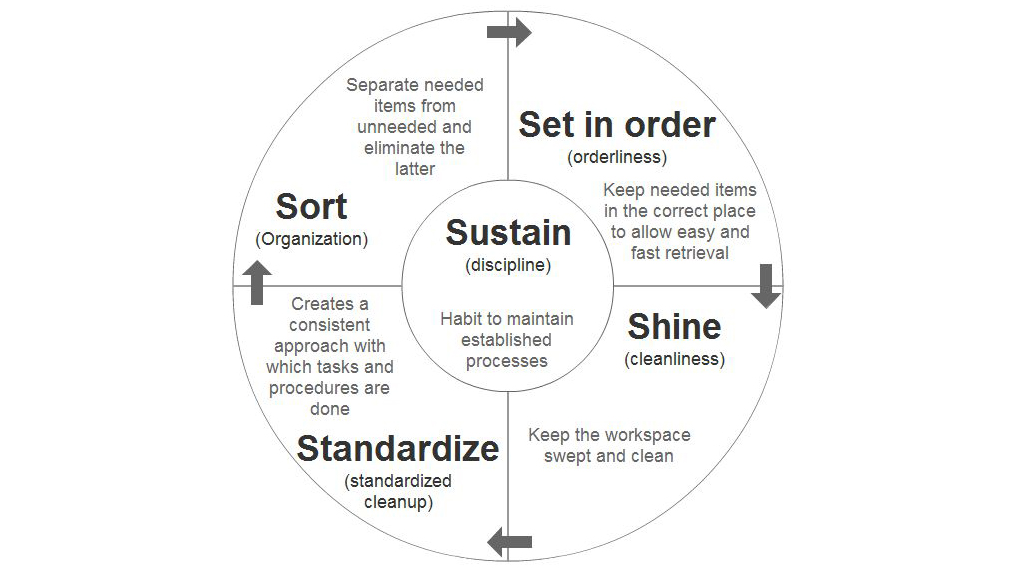
An infographic detailing the five pillars of the Kaizen 5S Framework: Sort, Set in Order, Shine, Standardize, and Sustain.
The Kaizen 5S FrameworkThe 5S framework is a system for organizing spaces so work can be performed efficiently, effectively, and safely. is a practical application of the LEAN philosophy, focused on workplace organization. The five steps—Sort, Set in Order, Shine, Standardize, and Sustain—create an environment where work can be performed efficiently and effectively. This isn't just about physical tidiness; in project management, it applies to how we organize our digital workspaces, our backlogs, and our communication, eliminating the "waste" of searching for information or dealing with unclear tasks.
A First Look at Kanban
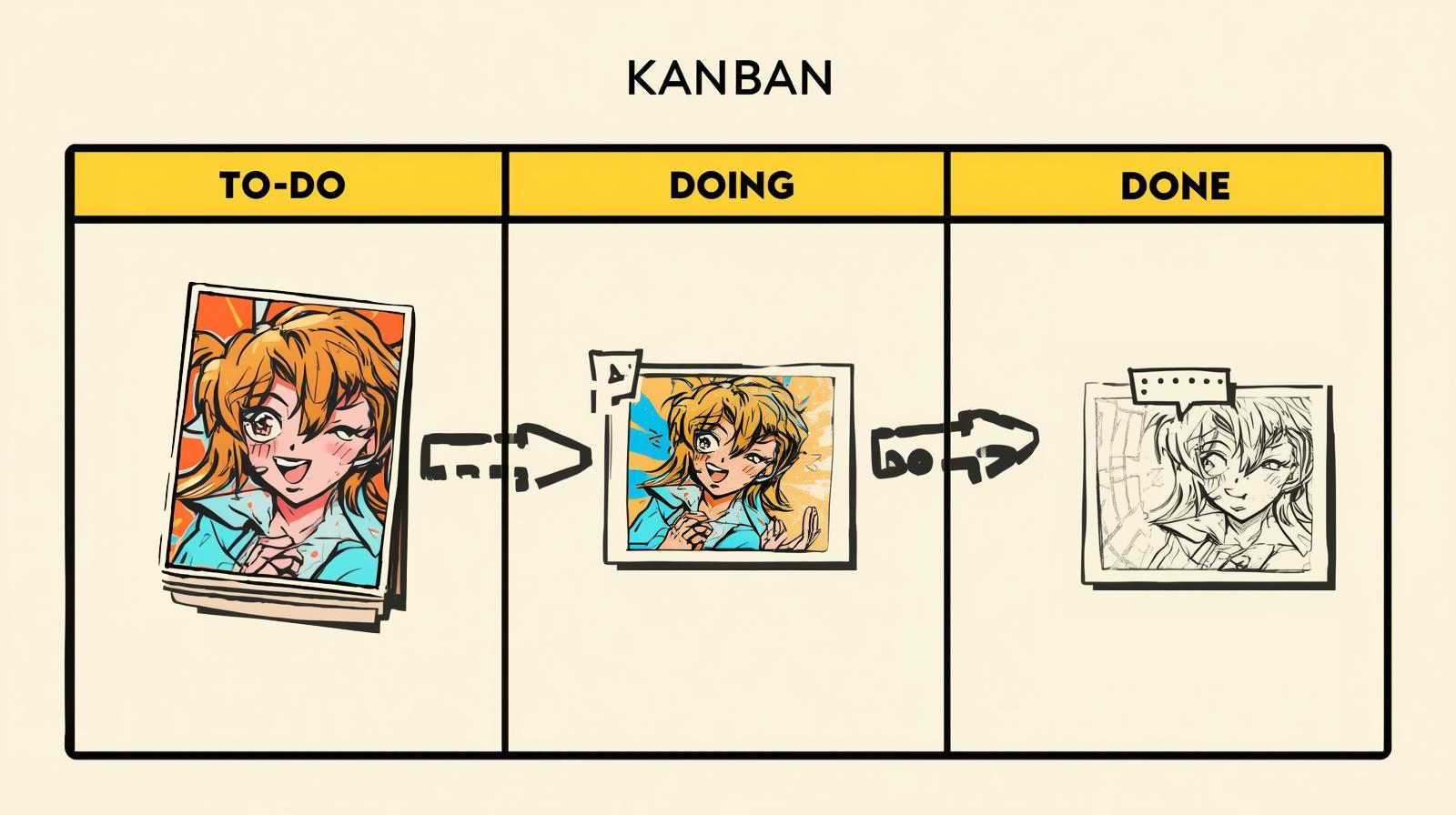
An infographic of a simple, three-column Kanban board labeled 'To Do,' 'In Progress (WIP Limit 3),' and 'Done.' Task cards are shown flowing from left to right.
KanbanKanban is a method for managing knowledge work with an emphasis on just-in-time delivery while not overloading the team members. is another popular Agile framework. While we'll dive deeper later, the core idea is to visualize your workflow. By making the work visible on a board, teams can easily see bottlenecks, manage the flow of tasks, and focus on completing work rather than just starting it. It's a powerful tool for transparency and continuous improvement.
Agile Frameworks: Scrum vs. Kanban
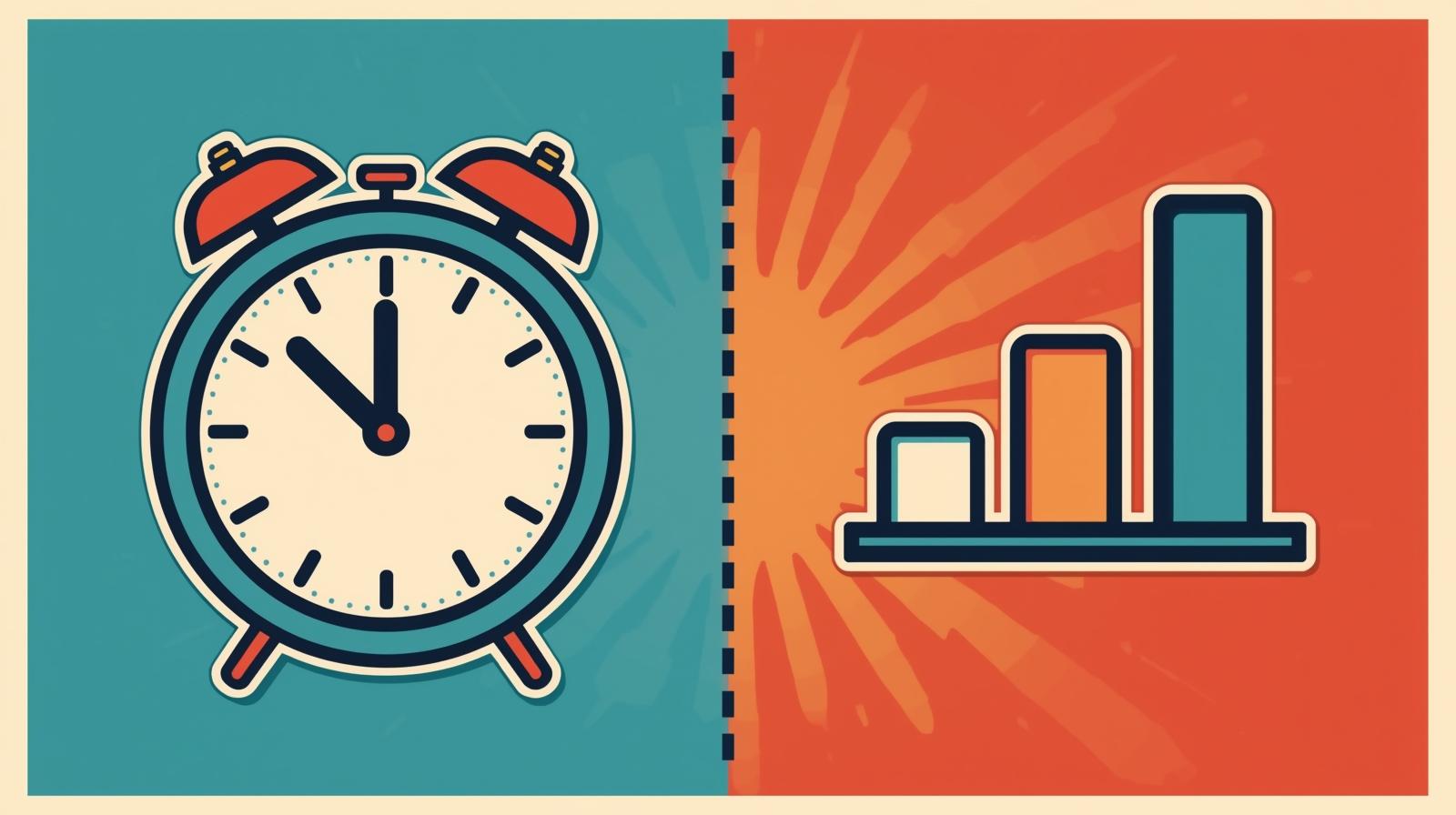
A side-by-side comparison chart contrasting Scrum (time-boxed, iterative) with Kanban (continuous flow, limiting WIP).
While both are Agile, Scrum and Kanban have different approaches. Scrum is structured around fixed-length iterations called Sprints, making it ideal for product development. Kanban is focused on a continuous flow of work and limiting Work In Progress (WIP), making it great for teams with a steady stream of tasks, like support or maintenance. Many teams even use a hybrid approach called Scrumban.
The Core of the Framework: Scrum Team
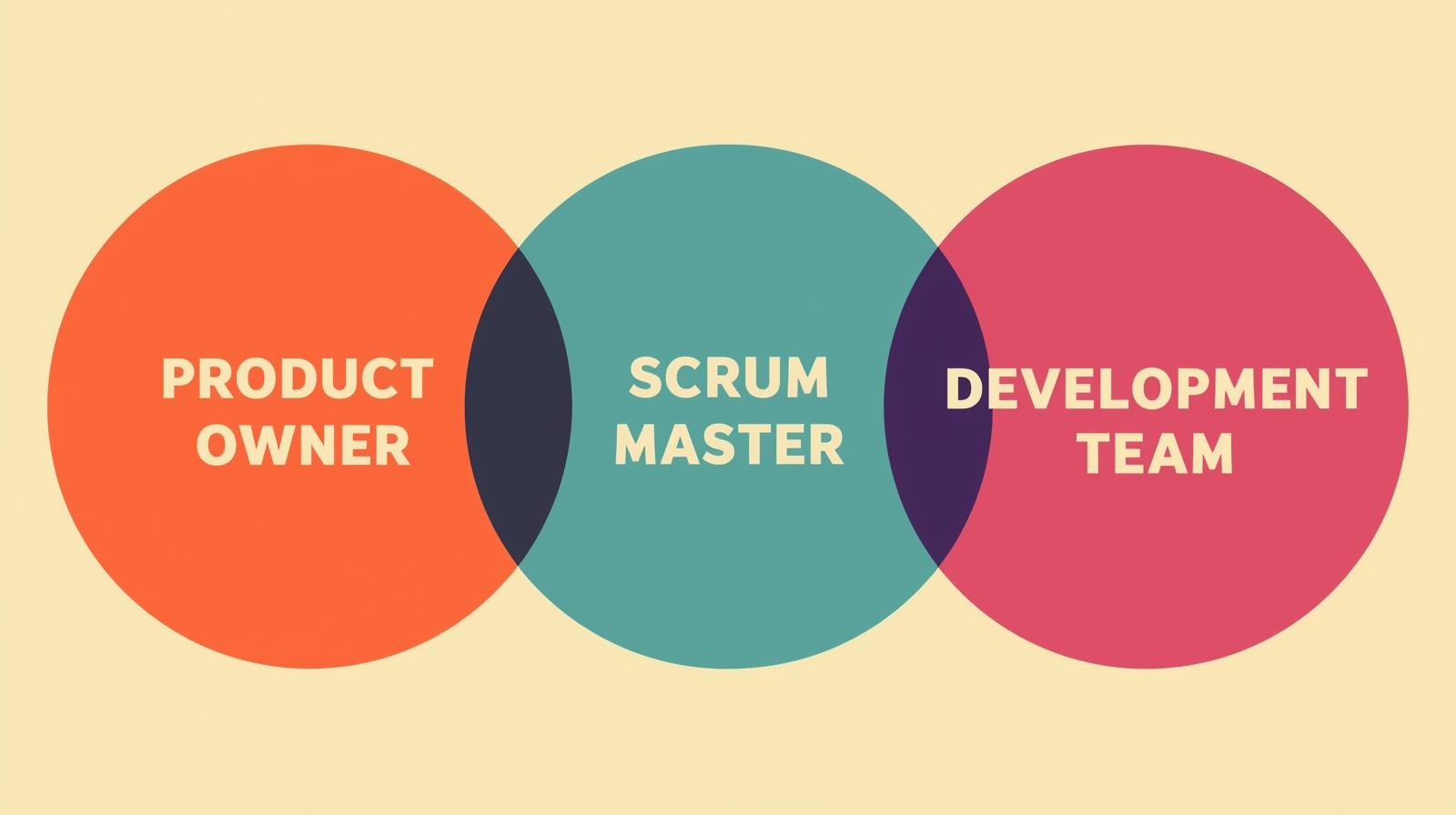
An infographic with three overlapping circles labeled 'Product Owner,' 'Scrum Master,' and 'Development Team,' illustrating shared ownership and distinct focus areas.
The Scrum TeamA Scrum Team is a small, cross-functional, and self-organizing group of people who are responsible for delivering a potentially releasable increment of a product at the end of each sprint. consists of three distinct accountabilities: the Product Owner, the Scrum Master, and the Developers. The Product Owner is responsible for maximizing the value of the product, the Scrum Master is a servant-leader who helps the team and the organization adopt Scrum, and the Developers are the cross-functional team of people who do the work. Together, they form a self-managing and collaborative unit.
Preparing for the Afternoon Practical
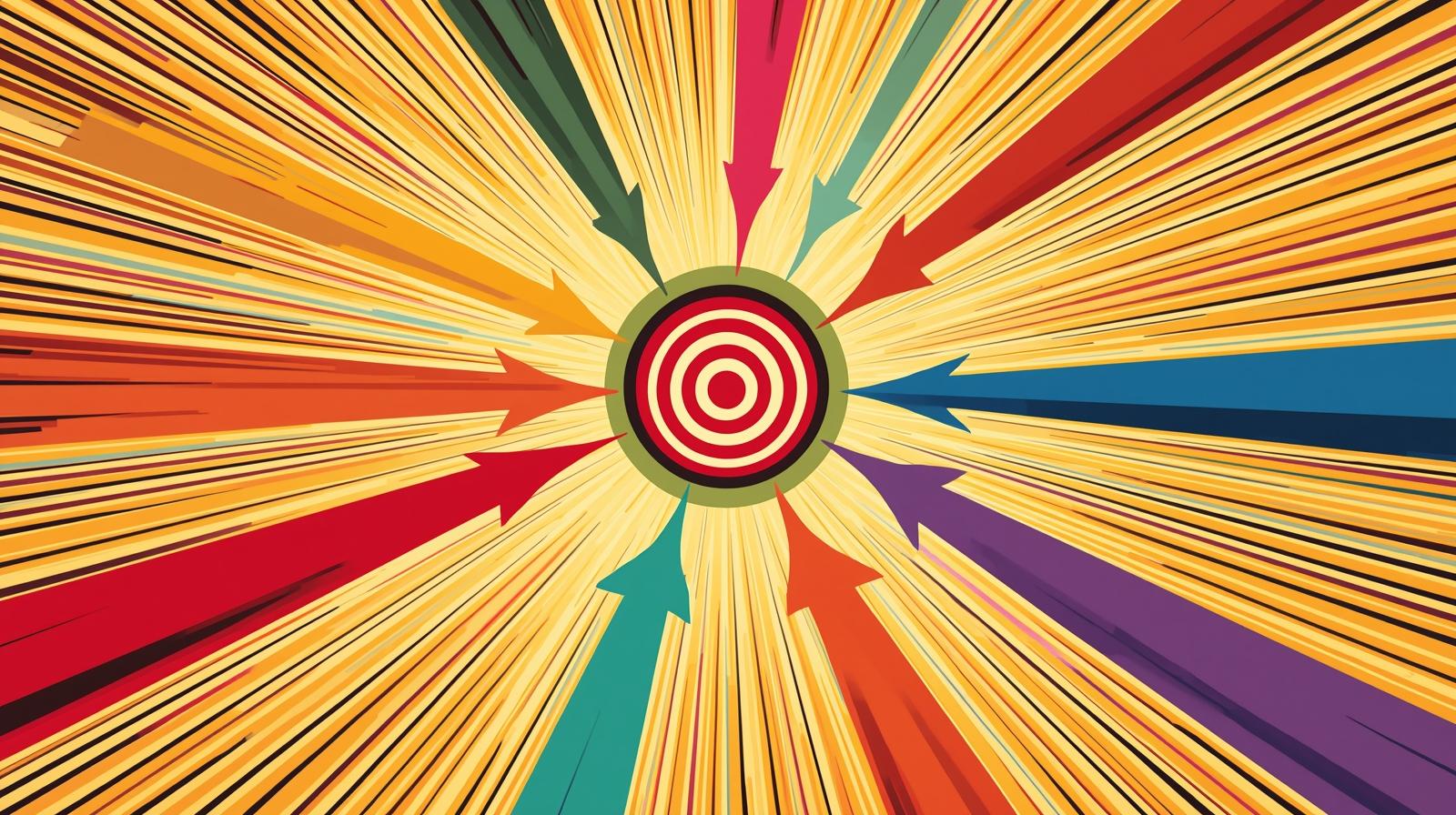
A target with an arrow hitting the absolute center bullseye, symbolizing the clear goal for the afternoon practical.
This afternoon, your group's first task is to define a clear Project Vision and identify your key stakeholders. You will need to take the complex scenario you've been given and distill it into a concise, powerful statement of purpose. Remember to think about who your project serves and who has a say in its success. This is the foundational step for all the work that will follow this week.